The independent appliance repair shop across the Mid-Atlantic
Built-In Microwave Repairs
We repair built-in and over-the-range microwaves, and the first step is a diagnosis so you know whether fixing it beats replacing it. Call and tell us what it's doing. Maybe it stopped heating, or the door latch quit, or the turntable sits still. The answer depends on the unit, the fault, and what a swap would drag along with it. Here's how we sort it out.
Call (888) 826-9217- A real person answers
- Open 7 days
- Written quote before work starts
Taking calls until 5:00 PM ET
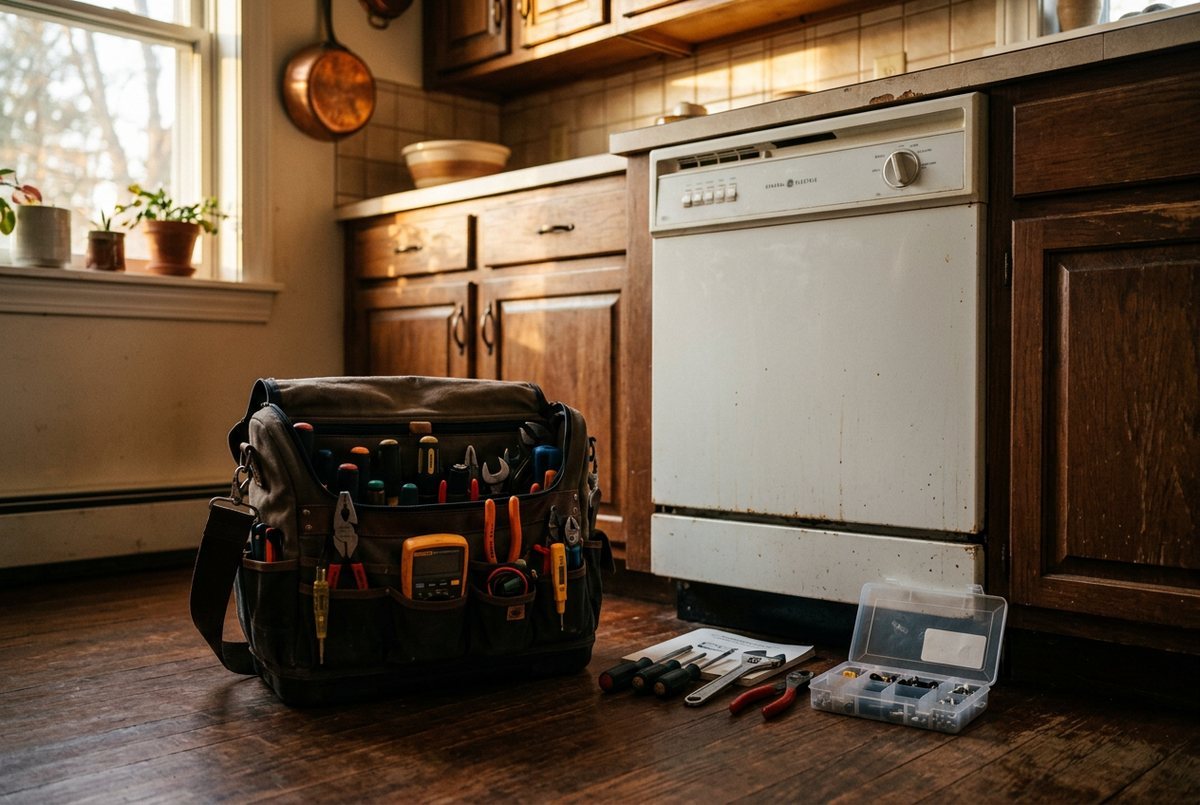
Norristown Appliances service team · field-reviewed before publishing
Age matters, but not the way people think
A ten-year-old built-in isn't automatically done. What matters more is how it's held up. If the cabinet is solid, the door hinges are tight, and the control panel still responds cleanly, an older unit can be worth fixing. If the keypad is peeling and the door sags while the interior paint flakes down to bare metal, that unit is telling you it's near the end. We look at the whole thing, not just the birth year. Built-ins also tend to be sized for a specific cabinet opening, so an older model that fits your trim kit has value a new box may not.
The fault itself tells most of the story
Some failures are straightforward. Door switches, turntable motors, cooling fans, control boards and light sockets are common and usually approachable. A microwave that runs but never heats often points to one part in the high-voltage section, which we handle with the unit unplugged and properly discharged. Never open that side yourself. Other faults are rougher. Arcing that has burned through the interior wall, a rusted-out cavity floor, or a warped door are structural problems, and those change the math fast. When we name the fault, we'll also tell you plainly whether it's a part swap or a symptom of something worn out underneath.
Whether the part still exists
Parts availability makes or breaks a lot of these calls. Common boards, switches and motors for widely sold models are usually easy to source. Discontinued models, oddball European built-ins, and units from brands that left the market can be harder. Sometimes a part is available but back-ordered for weeks, and you'd be without a microwave the whole time. We check availability before you commit to anything. If the part is a dead end, we say so on the visit instead of leaving you waiting. That's information you need to make a decision, not a sales pitch.
What happens during our visit
We start with what you noticed. When did it stop, what sound did it make, does the display still light up. Then we run the unit through its paces and test the parts that match the symptom. Over-the-range units come with extra questions, since the vent fan and cooktop light share the same housing. On a built-in wall unit we check the trim kit and clearance too. Once we know the fault, we walk you through it in plain terms: this part, this availability, this labor. You decide from there. No pressure either direction, and no repair started without your okay.
Times we'll tell you to replace it
Rust through the cavity floor or ceiling is a stop sign. So is a door that no longer seals square, since the door is the safety system. Heavy arcing damage that has eaten into the waveguide area often isn't worth chasing. And if a unit needs two or three major parts at once, the repair stops making sense against a new install. Cabinet fit still counts. Sometimes a replacement means carpentry, and that's worth knowing up front. Call us and tell us the symptoms. If replacement is the honest answer, we'll say it before you spend anything on parts.
When it is time to book
Related guides
Built-In Microwave Repairs — fast answers
My microwave runs but food comes out cold. Is that fixable?
Often yes. That symptom usually points to one component in the high-voltage section or a door switch, and it's a common repair on many models. Keep the unit unplugged and let a technician test it, since that area holds a charge.
Are over-the-range microwaves harder to repair than countertop units?
Not harder to diagnose, but heavier to work with. They mount to the wall and cabinet, and they include a vent fan and cooktop light. That's a few extra parts that can fail on their own, separate from the cooking function.
Can I keep using it while I wait for the repair?
If the door latch, seal or hinge is involved, no. Stop using it and unplug it. If it's a turntable motor or an interior light, it's generally fine to wait, though we'd still suggest getting it looked at soon.
How it works
- Step 1
Tell us the symptom
Call us or fill out the form and describe what you hear, smell or see. Grinding, leaking, no heat at all. If you can find the tag, give us the brand and roughly how old the machine is.
- Step 2
We book a window
Pick a visit time that fits your day. We ask ahead about tight doorways, basement stairs and stacked units, so the right tools come off the truck on the first trip.
- Step 3
Diagnose, then repair
Our tech tests the machine and explains what failed in plain words, then lays out your options. Common parts ride along on the van. If a part has to be ordered, we schedule a prompt return.
- A real person answers
- Open 7 days
- Written quote before work starts
Why homeowners call us
- Built for local kitchensNorristown is home base. We know the Philly rowhome galleys where the fridge barely clears the cabinet, and the 1960s split-levels with laundry tucked behind a furnace. A cramped space doesn't slow the repair down.
- Independent, not a dealerWe work for you, not a manufacturer. So you get straight talk about whether a machine is worth fixing or close to done. No script, no upsell pressure, and nobody steering you toward a showroom floor.
- Wide brand experienceRefrigerators, washers, dryers, dishwashers, ranges, wall ovens and cooktops. Front-load or top-load, gas or electric. We handle older workhorses and newer control boards, and we keep up with the common failure patterns across the major brands.
- Clear communicationYou hear what part failed and why. We'll show you the worn belt or the cracked pump housing. Floors get covered, cabinets stay protected, and the old parts leave with us.
- All major brands, gas & electricEvery major appliance brand, gas and electric, handled by an independent shop.
- Straight answersIf replacing beats repairing, you hear it from us first.
About this guide
Checked everything on the list and it still acts up?
Mention which checks you ran when you book; it speeds up the visit.
- A real person answers
- Open 7 days
- Written quotes
- All major brands
- Gas & electric
Rather not call? Get a free quote →