The independent appliance repair shop across the Mid-Atlantic
The Coil-Cleaning Habit That Saves Refrigerators
If your fridge runs almost nonstop and the ice cream is going soft, start by cleaning the condenser coils, and call us at Norristown Appliances if that doesn't settle it down. Nine times out of ten we open the bottom grille and find a mat of dust and pet hair packed against the coils. The kitchen feels warm down near the floor, nothing has broken yet, but something is clearly off. It's the cheapest problem on the list and the easiest one to put off.
Call (888) 826-9217- A real person answers
- Open 7 days
- Written quote before work starts
Taking calls until 5:00 PM ET
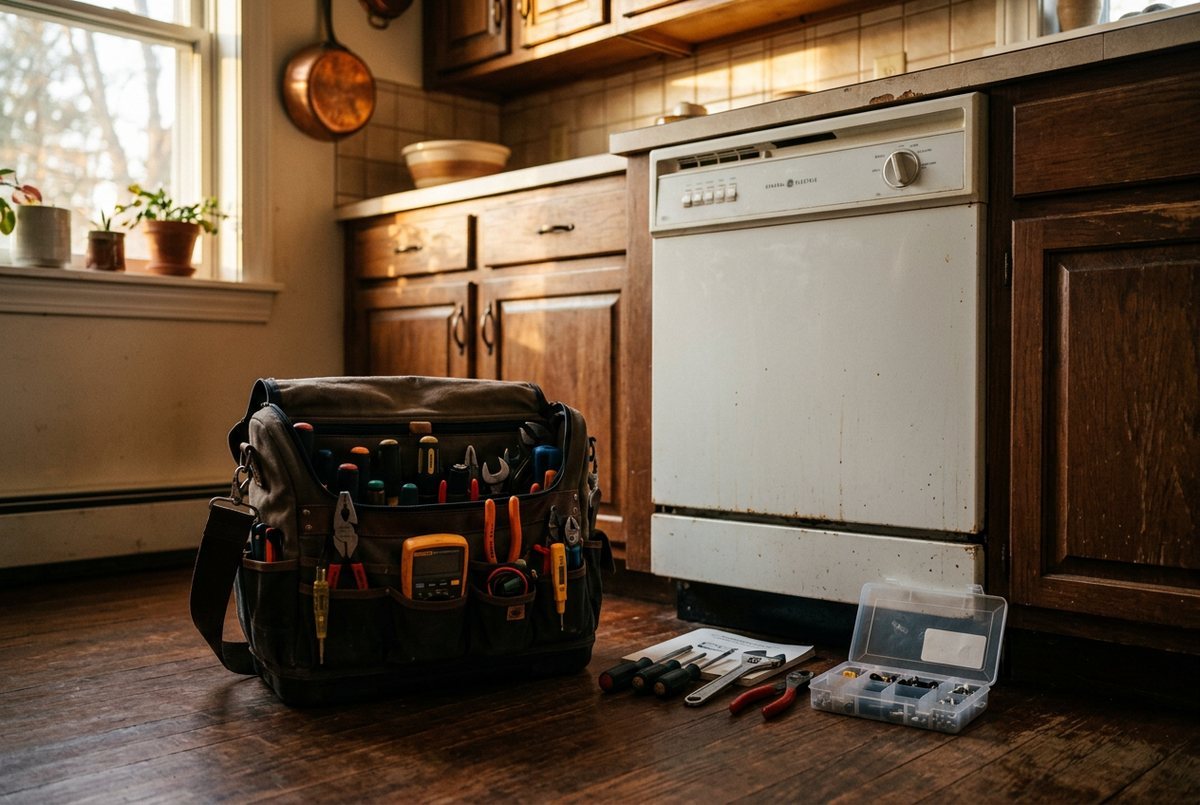
Norristown Appliances service team · field-reviewed before publishing
What dusty coils actually do to your fridge
Condenser coils dump heat out of the fridge, and when dust blankets them that heat has nowhere to go. So the compressor keeps running to make up the difference. Instead of cycling on and off through the day, it runs nearly all of it. Everything downstream feels that. The condenser fan motor runs hotter and the compressor's start components take more stress. Food temperatures creep up, so the freezer softens and the milk spoils early. In a tight Norristown galley kitchen where the fridge sits inches from a wall, the trapped heat has nowhere to go either. Give it a couple of years of that strain and a five-minute chore becomes a real repair call.
The five-minute habit
Unplug the fridge first. Always. Then find the coils: on most units they sit behind a snap-off grille at the bottom front, or across the back near the floor. The bottom grille pops off by hand, so you're fine, that's not a service panel. Use a coil brush or a vacuum with the crevice tool, and work gently along the fins rather than across them, since bent fins block airflow too. Vacuum the floor underneath while you're down there, because that dust gets pulled right back in. Snap the grille on, plug it back in, done. Leave the rear panel alone, don't touch wiring, and don't poke at anything sealed.
How often, and what makes it more often
Twice a year covers most homes, and spring and fall are easy to remember. Some kitchens need it quarterly. A shedding dog or cat is the big one, since hair mats onto coils faster than dust ever will. Carpet near the kitchen does it too, as does a basement fridge in a dusty older split-level or a house in the middle of renovation. If your fridge sits in a garage or an enclosed rowhome kitchen with poor airflow, check it more often. Pull the grille and look. Clean coils show clear metal between the fins. If you see gray felt, it's time, whatever the calendar says.
Signs it's gone past prevention
Cleaning helps a struggling fridge, but it won't fix a failed one. Call us when the compressor runs constantly and the fridge still sits above 40 degrees, or when the outside cabinet near the bottom or side feels hot to the touch and not just warm. Clicking every few minutes followed by silence usually means the compressor is trying to start and giving up. A freezer that frosts over while the fresh food side goes warm points at airflow or defrost trouble instead of coils. Puddles under the unit, a burning smell, or a breaker that trips when the fridge kicks on: stop, unplug, and call. Reach us.
What we check that you shouldn't
Anything behind a screwed-on panel is ours. Condenser fan motors, start relays, capacitors, and the sealed refrigerant system all carry real risk, and capacitors hold a charge even after you unplug the fridge. We test compressor amp draw and check whether the fan is spinning at all, since a dead condenser fan looks exactly like filthy coils from the outside. If you cleaned the coils and nothing improved after a full day, tell us. That narrows things down before we pull up. We're an independent shop working on all major brands, across Montgomery County and the surrounding area. Call us and describe what you're hearing.
The Coil-Cleaning Habit That Saves Refrigerators — fast answers
Can I use a leaf blower or compressed air instead?
Not indoors. It scatters dust through your kitchen and can drive it deeper into the coils. A vacuum pulls the debris out instead of pushing it in, and a soft coil brush with a crevice tool works better anyway.
My fridge doesn't have coils I can see. Now what?
Some newer models put the condenser in a sealed bottom compartment. If there's no removable front grille, don't force anything. Check the back near the floor instead. If you find nothing you can reach, skip it and call us.
Will cleaning coils lower my electric bill?
Usually a little. A compressor that runs constantly draws power constantly, and restoring airflow lets it cycle normally again. The bigger benefit is less wear, which keeps the compressor from failing years early.
How it works
- Step 1
Tell us the symptom
Call us or fill out the form and describe what you hear, smell or see. Grinding, leaking, no heat at all. If you can find the tag, give us the brand and roughly how old the machine is.
- Step 2
We book a window
Pick a visit time that fits your day. We ask ahead about tight doorways, basement stairs and stacked units, so the right tools come off the truck on the first trip.
- Step 3
Diagnose, then repair
Our tech tests the machine and explains what failed in plain words, then lays out your options. Common parts ride along on the van. If a part has to be ordered, we schedule a prompt return.
- A real person answers
- Open 7 days
- Written quote before work starts
Why homeowners call us
- Built for local kitchensNorristown is home base. We know the Philly rowhome galleys where the fridge barely clears the cabinet, and the 1960s split-levels with laundry tucked behind a furnace. A cramped space doesn't slow the repair down.
- Independent, not a dealerWe work for you, not a manufacturer. So you get straight talk about whether a machine is worth fixing or close to done. No script, no upsell pressure, and nobody steering you toward a showroom floor.
- Wide brand experienceRefrigerators, washers, dryers, dishwashers, ranges, wall ovens and cooktops. Front-load or top-load, gas or electric. We handle older workhorses and newer control boards, and we keep up with the common failure patterns across the major brands.
- Clear communicationYou hear what part failed and why. We'll show you the worn belt or the cracked pump housing. Floors get covered, cabinets stay protected, and the old parts leave with us.
- All major brands, gas & electricEvery major appliance brand, gas and electric, handled by an independent shop.
- Straight answersIf replacing beats repairing, you hear it from us first.
About this guide
When the easy checks change nothing, it's time for a tech
Mention which checks you ran when you book; it speeds up the visit.
- A real person answers
- Open 7 days
- Written quotes
- All major brands
- Gas & electric
Rather not call? Get a free quote →