The independent appliance repair shop across the Mid-Atlantic
Dishwasher Leaving Dishes Dirty
If your dishwasher runs a full cycle and the dishes come out gritty, cloudy, or still holding rice, start with the filter, the spray arms, and how hot your water is when the machine fills. No leak, no error code, cycle ran start to finish, and the plates are still dirty. That's a common call. Here's the same path we walk in Norristown kitchens, cheapest checks first.
Call (888) 826-9217- A real person answers
- Open 7 days
- Written quote before work starts
Taking calls until 5:00 PM ET
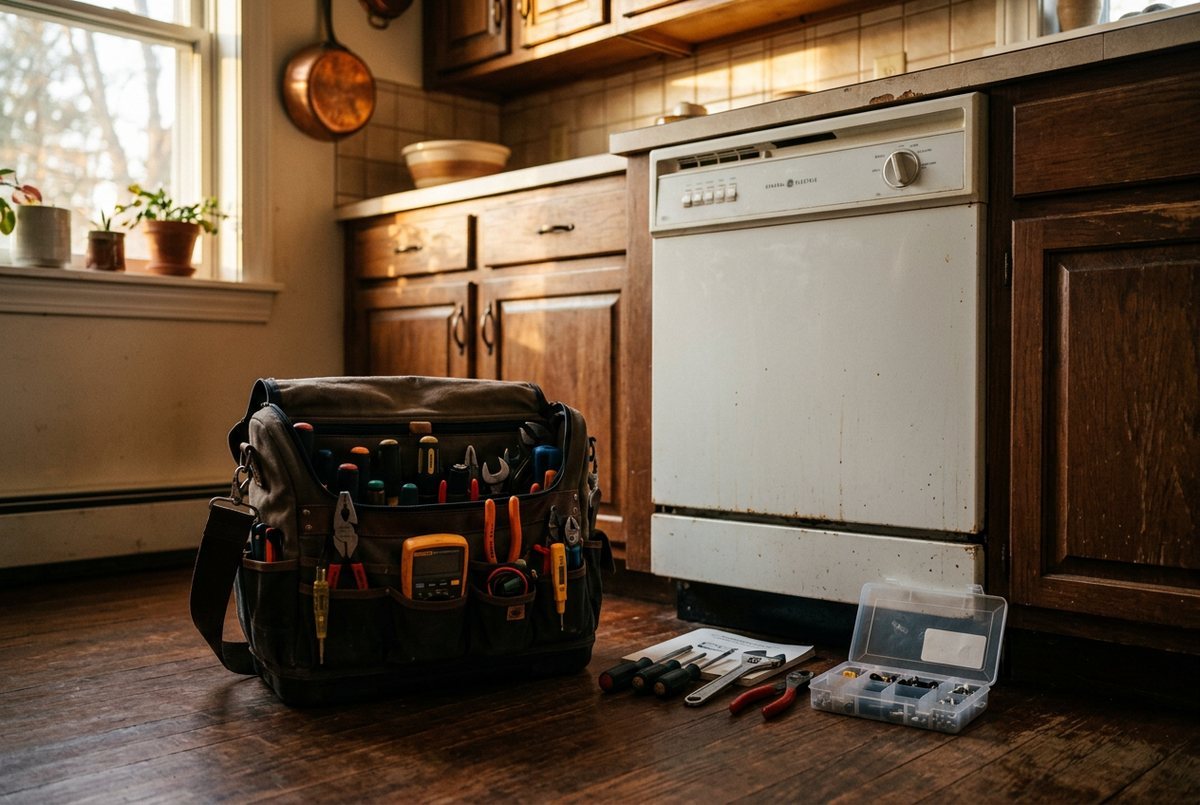
Norristown Appliances service team · field-reviewed before publishing
What dirty dishes actually tell us
A dishwasher cleans with hot water, spray pressure, and detergent that dissolves. Take away one of those and food stays where it was. Grit on the bottom rack usually means water isn't draining or filtering right. Cloudy film on glass points to water temperature or a detergent problem. Food baked onto the top rack often means the upper spray arm isn't turning. So the pattern of the mess is your first clue. Look at where the dishes are dirty before you look at the machine, then work from the easiest fix outward. That's how the rest of this guide is laid out.
Start with loading, detergent, and hot water
These cause more complaints than broken parts do. Overloading blocks spray. Big platters laid flat across the bottom rack shadow everything behind them, bowls nested together trap dirty water, and cups tipped upright fill and stay full. Next, check the detergent. Pods and powder go stale in a damp cabinet, and old detergent won't dissolve, so store it dry and use fresh. Then the water. Run the kitchen faucet hot before you start the cycle so the machine doesn't fill with cold pipe water. In older Norristown homes with the water heater two floors down, that wait matters more than you'd think.
Clogged filter, spray arms, and drain
Pull the bottom rack out. Twist and lift the cylinder filter at the floor of the tub, rinse it under the tap, and scrub the mesh with a soft brush. Wipe any grit out of the well underneath. Now spin both spray arms by hand. They should turn freely. Hold one up to the light and look at the little holes. Seeds, labels, and toothpicks plug them, and a toothpick clears them, not a metal pin. Check the small upper arm under the top rack too. Last thing: look for standing water in the bottom after a cycle. That's a drain issue, not a cleaning issue.
Safe checks a homeowner can finish alone
Stick to what's outside the machine. Rinse the filter and clear the spray arm holes. Check that the little detergent door isn't blocked by a tall item and that it actually opens. Feel the water at the sink to confirm you have real hot water. Make sure the sink drain and disposal are clear, since many dishwashers drain through them. Run an empty hot cycle with a cup of white vinegar on the top rack to cut mineral film. That's the line. Don't remove panels, unplug and probe wiring, or take apart the pump housing. Those steps put you in reach of live parts and water lines at the same time.
What we do that's different
We measure instead of guess. A thermometer tells us the fill temperature, and a timer tells us whether the machine is holding a heat cycle at all. We check inlet water pressure and look at the fill valve for scale. We test the circulation pump and the diverter that alternates spray between racks, because a weak pump looks exactly like clogged arms from the outside. We inspect the chopper, the drain hose loop, and the wash motor bearings. Then we tell you plainly whether you're looking at a part, a plumbing problem, or a machine near the end of its life. We're an independent shop and we work on all major brands. Call us.
Dishwasher Leaving Dishes Dirty — fast answers
Should I rinse dishes before loading?
Scrape off bones and heavy food, but skip the full rinse. Modern detergents need some soil to work against. What matters more is leaving space between items so water reaches every surface.
Why are my glasses cloudy instead of dirty?
That's usually hard water minerals or etching rather than poor washing. A vinegar rinse cycle or a rinse aid often clears the film. If the cloud won't wipe off at all, the glass is etched and that's permanent.
Is a dishwasher that won't clean worth repairing?
Often yes. Filters, spray arms, and pumps are common repairs. We look at the machine's age and condition, then give you a straight read on whether fixing it makes sense.
How it works
- Step 1
Tell us the symptom
Call us or fill out the form and describe what you hear, smell or see. Grinding, leaking, no heat at all. If you can find the tag, give us the brand and roughly how old the machine is.
- Step 2
We book a window
Pick a visit time that fits your day. We ask ahead about tight doorways, basement stairs and stacked units, so the right tools come off the truck on the first trip.
- Step 3
Diagnose, then repair
Our tech tests the machine and explains what failed in plain words, then lays out your options. Common parts ride along on the van. If a part has to be ordered, we schedule a prompt return.
- A real person answers
- Open 7 days
- Written quote before work starts
Why homeowners call us
- Built for local kitchensNorristown is home base. We know the Philly rowhome galleys where the fridge barely clears the cabinet, and the 1960s split-levels with laundry tucked behind a furnace. A cramped space doesn't slow the repair down.
- Independent, not a dealerWe work for you, not a manufacturer. So you get straight talk about whether a machine is worth fixing or close to done. No script, no upsell pressure, and nobody steering you toward a showroom floor.
- Wide brand experienceRefrigerators, washers, dryers, dishwashers, ranges, wall ovens and cooktops. Front-load or top-load, gas or electric. We handle older workhorses and newer control boards, and we keep up with the common failure patterns across the major brands.
- Clear communicationYou hear what part failed and why. We'll show you the worn belt or the cracked pump housing. Floors get covered, cabinets stay protected, and the old parts leave with us.
- All major brands, gas & electricEvery major appliance brand, gas and electric, handled by an independent shop.
- Straight answersIf replacing beats repairing, you hear it from us first.
About this guide
Safe checks done and it still misbehaves? That's a real fault
Describe what you found and we'll take it from there. Booking takes about a minute.
- A real person answers
- Open 7 days
- Written quotes
- All major brands
- Gas & electric
Rather not call? Get a free quote →