The independent appliance repair shop across the Mid-Atlantic
What Hard Water Does to Appliances, Year After Year
If your dishwasher is leaving cloudy glasses and your kettle has a crusty ring, hard water minerals are the likely cause, and a regular descaling habit is the fix. Around here, well water and older municipal lines carry a lot of dissolved minerals, and those minerals don't stop at your dishes. They build up inside heaters, valves and pumps until parts quit early. Here's what's going on and what you can do about it.
Call (888) 826-9217- A real person answers
- Open 7 days
- Written quote before work starts
Taking calls until 5:00 PM ET
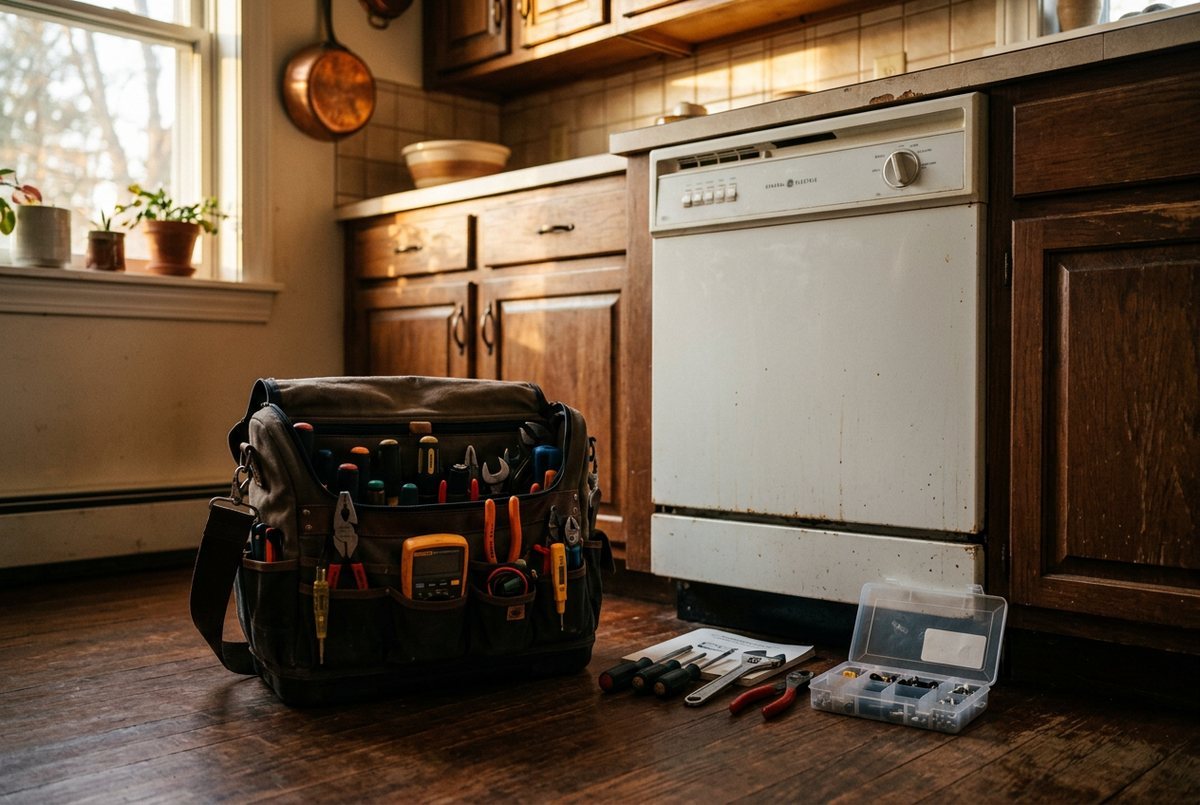
Norristown Appliances service team · field-reviewed before publishing
What minerals actually do inside your machines
Hard water carries calcium and magnesium. Heat it and they drop out of the water as scale, a chalky crust that sticks to anything hot. In a dishwasher or washer, that crust coats the heating element and the inside of the hoses, and it acts like a blanket. The element works harder and longer to hit temperature, so it burns out sooner. Spray arm holes narrow and dishes come out gritty. Water inlet valves pick up grit in the seat, then start weeping or sticking open. In a water heater, sediment settles on the bottom and the tank gets noisy. None of this happens overnight. It takes years, quietly.
The one habit that prevents most of it
Run a descaler through your dishwasher and washing machine on a regular schedule. Use a citric acid dishwasher cleaner, or set plain white vinegar in a bowl on the top rack and run the hottest cycle empty. For a front-load washer, use a washer cleaning tablet on the clean-cycle setting, or a couple cups of vinegar on a hot wash with no clothes in it. While you're standing there, pull the dishwasher's bottom filter, rinse it under the tap and drop it back in. Wipe the door gasket. That's the whole job. No panels, no tools, and nothing electrical to reach.
How often, realistically
If your water is noticeably hard, descale the dishwasher every month and the washer every month or two. On softer city water, every three months usually does it. Not sure which you have? Look at the kettle. If a white crust forms in a few weeks, treat your water as hard. Rinse aid in the dishwasher helps more than people expect, and it's a refill rather than a repair. Check the salt setting too, if your model uses one. Homeowners on well water often add a whole-house softener, which protects every appliance at once, including the water heater and ice maker.
Signs prevention time has passed
Watch for a dishwasher that runs a full cycle and leaves the dishes cool and wet. That usually means the heating element is scaled or done. A washer that takes forever to fill, or keeps filling after it's off, points to a valve fouled with grit. Ice makers turning out small, hollow or cloudy cubes generally have a restricted fill line, and a water heater that pops and rumbles has sediment sitting on the bottom. Brown flakes in the laundry, a burnt smell during a dry cycle, or standing water in the dishwasher tub after it drains all mean it's time for hands other than yours.
When to call us
Descaling fixes buildup. It won't fix a burnt element, a cracked valve or a pump with a scored impeller. If you've cleaned everything you can safely reach and the symptom is still there, stop. Don't pull panels, don't take the machine apart, and don't try to clear a line with pressure. We're an independent shop and we work on all major brands, and we've spent plenty of time in Norristown galley kitchens and split-level laundry closets where the machine barely clears the door. Tell us the sound, the smell and the cycle it shows up on. Call us and we'll figure out what's worth repairing.
What Hard Water Does to Appliances, Year After Year — fast answers
Is vinegar safe to use in my dishwasher?
Once in a while, yes. A bowl of white vinegar on the top rack during a hot empty cycle is fine. Very frequent use can be rough on rubber seals, so for monthly descaling a citric acid dishwasher cleaner is gentler.
Will a water softener undo damage that's already done?
No. A softener keeps new scale from forming, so everything downstream is protected going forward. Buildup already on a heating element or valve stays where it is. Descaling can take some of it off, but failed parts still need replacing.
Why are my glasses cloudy even after descaling?
That film is usually mineral residue left behind as the water dries. Add rinse aid and keep the tank filled. If the cloudiness feels etched and won't wipe off, the glass itself is damaged and no amount of cleaning brings it back.
How it works
- Step 1
Tell us the symptom
Call us or fill out the form and describe what you hear, smell or see. Grinding, leaking, no heat at all. If you can find the tag, give us the brand and roughly how old the machine is.
- Step 2
We book a window
Pick a visit time that fits your day. We ask ahead about tight doorways, basement stairs and stacked units, so the right tools come off the truck on the first trip.
- Step 3
Diagnose, then repair
Our tech tests the machine and explains what failed in plain words, then lays out your options. Common parts ride along on the van. If a part has to be ordered, we schedule a prompt return.
- A real person answers
- Open 7 days
- Written quote before work starts
Why homeowners call us
- Built for local kitchensNorristown is home base. We know the Philly rowhome galleys where the fridge barely clears the cabinet, and the 1960s split-levels with laundry tucked behind a furnace. A cramped space doesn't slow the repair down.
- Independent, not a dealerWe work for you, not a manufacturer. So you get straight talk about whether a machine is worth fixing or close to done. No script, no upsell pressure, and nobody steering you toward a showroom floor.
- Wide brand experienceRefrigerators, washers, dryers, dishwashers, ranges, wall ovens and cooktops. Front-load or top-load, gas or electric. We handle older workhorses and newer control boards, and we keep up with the common failure patterns across the major brands.
- Clear communicationYou hear what part failed and why. We'll show you the worn belt or the cracked pump housing. Floors get covered, cabinets stay protected, and the old parts leave with us.
- All major brands, gas & electricEvery major appliance brand, gas and electric, handled by an independent shop.
- Straight answersIf replacing beats repairing, you hear it from us first.
About this guide
Checked everything on the list and it still acts up?
Bring your notes from the checks to the call and booking takes no time.
- A real person answers
- Open 7 days
- Written quotes
- All major brands
- Gas & electric
Rather not call? Get a free quote →