The independent appliance repair shop across the Mid-Atlantic
Gas Burner Won't Light
If one gas burner won't light and the others do, the problem is almost always at that burner, and it's often something you can clear in ten minutes. You turn the knob, hear the hiss, get click, click, click and nothing. Or no click at all, just a smell that makes you shut it right back off. Dinner time, pan already out, and you want to know whether to grab a toothbrush or the phone.
Call (888) 826-9217- A real person answers
- Open 7 days
- Written quote before work starts
Taking calls until 5:00 PM ET
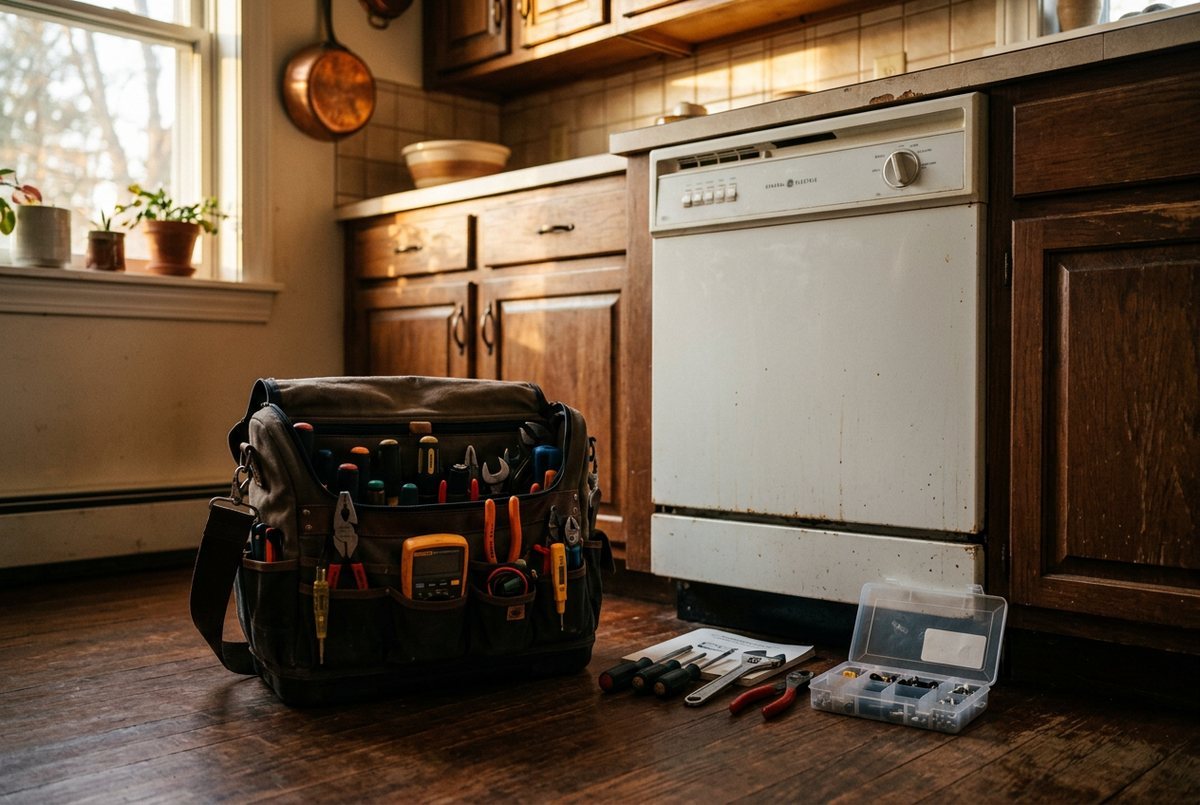
Norristown Appliances service team · field-reviewed before publishing
What the symptom is actually telling you
A gas burner needs gas at the port, a spark or pilot flame, and clean openings where the two meet. When one burner won't light but the rest do, the trouble is local to that burner. A clogged port. A wet igniter, or a cap sitting crooked. When no burner lights and you hear no clicking anywhere, it's something shared: power to the spark module, or the control feeding it. That difference tells us where to start, so notice which one you have before you touch anything. And note if you smell gas, because that changes the order of everything.
Start here: gas smell and the shut-off
If you smell gas and the burner won't light, stop. Turn the knob fully off and open a window. Do not keep clicking the igniter. Gas that pools and then sparks is the one real hazard in this whole job. Let the kitchen air out for several minutes before you try again. If the smell hangs around with every knob off, leave the house and call your gas utility from outside. That's their call, not ours. Never test a suspected leak with a flame, and never poke at the gas line, the regulator, or anything behind a panel. Those are tool-and-training jobs, not kitchen-towel jobs.
The cheap causes, in order
First, spills. Boil-over from soup or pasta water dries in the burner ports and blocks gas, so the burner lights on one side only, or sputters. Second, a misplaced burner cap or grate. Lift the cap off and set it back down flat, since many caps only spark right when seated. Third, a wet igniter. After a big cleaning or a boil-over, moisture keeps the spark from jumping, and it clicks and clicks with nothing catching. Give it a few hours dry. Fourth, and the one we usually get called for, is a worn spark electrode or a failed spark module. That one clicks weakly, clicks on the wrong burner, or doesn't click at all.
Safe checks you can do right now
Turn off all knobs and let the cooktop cool completely. Lift off the grate and the burner cap. Look at the little slots around the burner ring, and if they're crusted, scrub gently with a stiff toothbrush and warm soapy water, then dry them fully. A straightened paperclip clears a stubborn slot. Never a toothpick, which can snap off inside. Wipe the ceramic igniter tip clean and dry, no scraping. Reseat the cap flat and the grate square. Check that the range is plugged in and the breaker isn't tripped, because electric ignition needs power even on a gas stove. That's the whole safe list. Anything behind a panel, stop there.
What we do differently on a service call
We test the spark instead of guessing at it. That means checking the electrode gap and the ignition wire for cracked insulation, then reading the spark module's output to see whether the clicking you hear is strong enough to light gas at all. On models with safety valves, we verify the flame sensor is telling the valve to stay open. A burner that lights and dies two seconds later is usually that, not a dirty port. We check gas pressure at the manifold with proper equipment, confirm the orifice matches your fuel, and swap the failed part. We work on all major brands as an independent shop. Call us and tell us which burner and whether it clicks.
Gas Burner Won't Light — fast answers
Why does my burner click over and over but never light?
Spark is happening but gas isn't reaching it, or the spark is too weak. Usually that's clogged burner ports, a cap that isn't seated flat, or a damp igniter. If everything's dry and clean and it still clicks, the electrode or module needs testing.
Can I light the burner with a match until it's fixed?
Many gas cooktops will light with a match, but only if you smell no gas and the burner is clean. Light the match first, then turn the knob. If gas has already been flowing, air the room out before you strike anything.
All four burners stopped clicking at once. What broke?
Shared parts point to a shared cause. Check the plug and the breaker first, since electronic ignition needs power. If power is fine, the spark module or the control board is the likely failure, and that needs testing rather than swapping.
How it works
- Step 1
Tell us the symptom
Call us or fill out the form and describe what you hear, smell or see. Grinding, leaking, no heat at all. If you can find the tag, give us the brand and roughly how old the machine is.
- Step 2
We book a window
Pick a visit time that fits your day. We ask ahead about tight doorways, basement stairs and stacked units, so the right tools come off the truck on the first trip.
- Step 3
Diagnose, then repair
Our tech tests the machine and explains what failed in plain words, then lays out your options. Common parts ride along on the van. If a part has to be ordered, we schedule a prompt return.
- A real person answers
- Open 7 days
- Written quote before work starts
Why homeowners call us
- Built for local kitchensNorristown is home base. We know the Philly rowhome galleys where the fridge barely clears the cabinet, and the 1960s split-levels with laundry tucked behind a furnace. A cramped space doesn't slow the repair down.
- Independent, not a dealerWe work for you, not a manufacturer. So you get straight talk about whether a machine is worth fixing or close to done. No script, no upsell pressure, and nobody steering you toward a showroom floor.
- Wide brand experienceRefrigerators, washers, dryers, dishwashers, ranges, wall ovens and cooktops. Front-load or top-load, gas or electric. We handle older workhorses and newer control boards, and we keep up with the common failure patterns across the major brands.
- Clear communicationYou hear what part failed and why. We'll show you the worn belt or the cracked pump housing. Floors get covered, cabinets stay protected, and the old parts leave with us.
- All major brands, gas & electricEvery major appliance brand, gas and electric, handled by an independent shop.
- Straight answersIf replacing beats repairing, you hear it from us first.
About this guide
Past the safe checks, it's a job for tools and a meter
Tell us what you tried and what it did. The booking itself takes a minute.
- A real person answers
- Open 7 days
- Written quotes
- All major brands
- Gas & electric
Rather not call? Get a free quote →